Why E-Paper Is Different From a Conventional Digital Photo Frame
No backlight, reflective E-Paper and black-and-white photography: discover how APHEUM combines a print-like presence with digital image changes and your own photographs.
In diesem Artikel
- No backlight
- A digital image that can behave more like a print
- Why matte presentation matters
- Wireless placement changes the room
- Digital does not have to mean constantly connected
- Your own photographs without a subscription
- A different rhythm for digital photography
- E-Paper or conventional digital frame?
- The idea behind APHEUM
- Explore further
Most digital photo frames are essentially small screens.
They use LCD technology, emit light, require continuous power and visually behave much like a tablet mounted on a wall or placed on a shelf.
E-Paper takes a fundamentally different approach.
Instead of trying to make photographs brighter, faster or more animated, it can make digital photography feel quieter and more physical.
That difference is at the heart of APHEUM.
No backlight
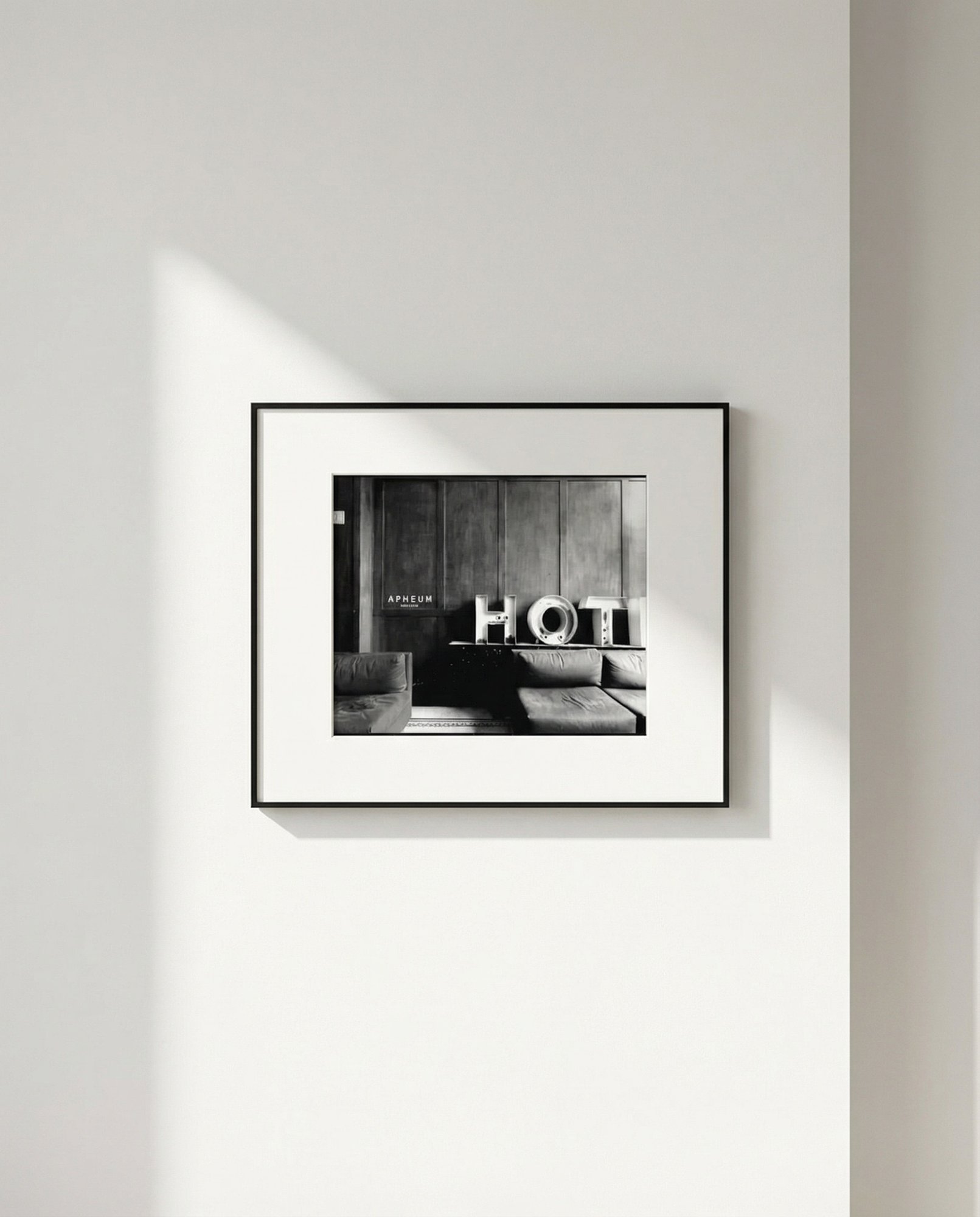
APHEUM E-Paper Frames have no backlight. Their reflective display needs ambient light, so a dark room requires external lighting to see the photograph.
LCD and OLED displays emit light toward the viewer.
E-Paper is reflective. Ambient light illuminates the image in a way that is closer to paper than to a conventional screen.
The result is especially noticeable in interiors.
Instead of adding another glowing surface to a room, the image can remain visually calm.
For photography and art, that changes the experience significantly.
A digital image that can behave more like a print
A printed photograph does not compete for attention by glowing.
It simply exists in the room.
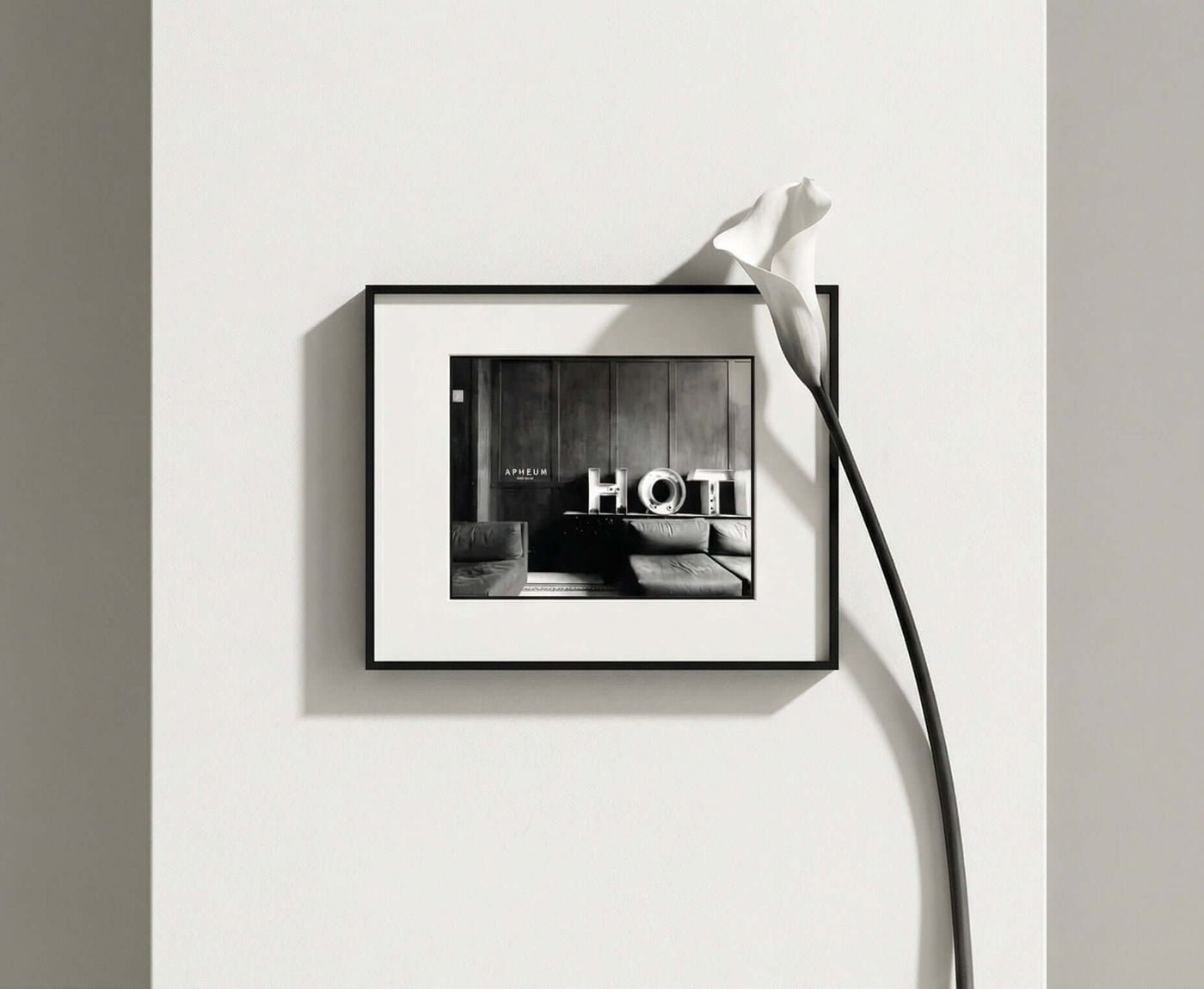
APHEUM was developed around this idea: retaining the flexibility of digital photography while moving the visual experience closer to framed photographic art.
Its Deep-Grayscale processing is designed specifically for nuanced black-and-white imagery, while anti-reflective art glass and a traditional frame construction reinforce the impression of a physical picture object.
The technology remains digital.
The visual language does not have to look digital.
Why matte presentation matters
Glossy screens can be highly effective for video, entertainment and saturated colour.
For photographic presentation, however, reflections and screen brightness can also dominate the image itself.
A matte, non-emissive surface behaves differently.
Black-and-white photographs in particular benefit from subtle tonal transitions, shadows and highlights that can be viewed without the characteristic glow of an LCD.
This is one reason E-Paper is increasingly interesting not only as a reading technology but also as a medium for photographic presentation.
Wireless placement changes the room
Conventional digital frames normally require continuous power.
That means visible cables, nearby sockets or additional installation work.
APHEUM Frames are designed for highly energy-efficient operation and can run on standard AAA batteries for up to twelve months, depending on use.
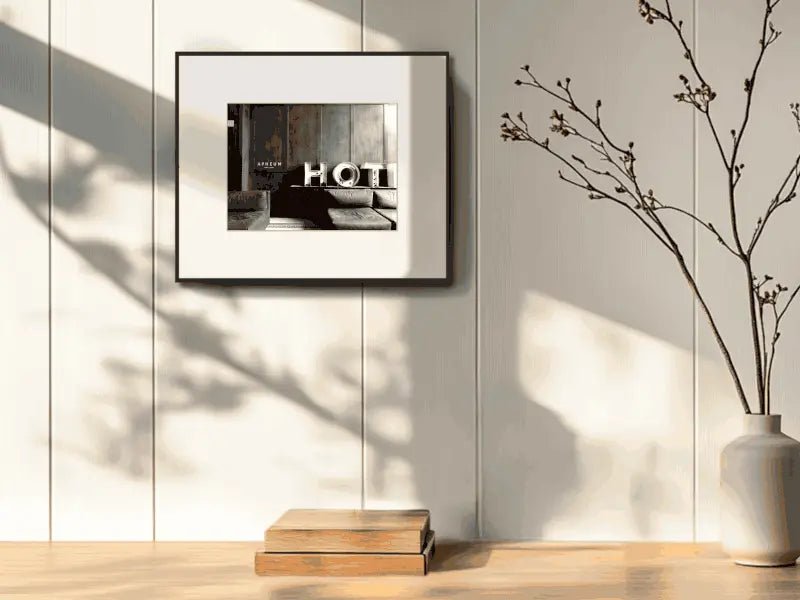
The frame can therefore be placed more like a conventional artwork.
On a wall.
On a sideboard.
In a hallway.
Inside a hotel room, office or gallery environment.
The architecture does not need to be organised around a power cable.
Digital does not have to mean constantly connected
The image is selected through the APHEUM app and transferred to the Frame.
A permanent Wi-Fi connection is not necessary for the image to remain visible.
Once transferred, the picture stays on the E-Paper display.
This also changes the character of the product.
It is not designed to be a constantly active media device.
It is designed to show an image.
Your own photographs without a subscription
Another important distinction is the content model.
Every APHEUM Frame includes access to the Private Collection for personal images as a lifetime licence.
Owners can therefore display their own photographs without an ongoing subscription fee.
Curated photography and artist collections are available separately for those who want to add professionally selected photographic series.
These collections work exclusively on APHEUM Frames; they are not downloadable image libraries. The terms and duration of each collection are listed with its offer.
The two models are independent.
You can use your own images.
You can add curated photography.
Or you can combine both.
A different rhythm for digital photography
Smartphones and social networks have trained us to move through photographs quickly.
E-Paper encourages almost the opposite behaviour.
One photograph can remain visible for a day, a week or several months.
It can then be replaced without replacing the frame itself.
This creates a slower relationship with digital images.
The photograph becomes part of the space rather than part of a feed.
E-Paper or conventional digital frame?
A conventional digital photo frame is often the better choice if you want:
colour video
rapid slideshows
animations
bright screen presentation
entertainment features
E-Paper becomes interesting when the priorities are different:
no backlight
matte image presentation
low energy consumption
wireless placement
black-and-white photography
quiet integration into an interior
These are not two versions of exactly the same product.
They represent two different ideas of what a digital image in a room can be.
The idea behind APHEUM
APHEUM combines E-Paper technology with a frame designed around photography rather than screen entertainment.
The aim is simple:
Digital images should be able to change without having to look like they are displayed on a screen.
For people who value black-and-white photography, interior design and the physical presence of a framed image, that difference can be substantial.